Quick Answer: What to do after moving into a new house comes down to a few priorities: confirm utilities, secure the property, and set up essentials like a place to sleep and your daily-use items before unpacking everything else. Following that order helps you avoid wasted time, unnecessary rework, and a more stressful first few days.
What to Expect Right After You Arrive
You walk in, boxes are stacked everywhere, and the structure of moving day disappears fast. This is the point where many people lose momentum. Without a clear plan, it turns into opening random boxes and trying to do everything at once.
At Quantum Moving, we’ve seen how quickly the first few hours can set the tone. When there’s no structure, essentials get buried, rooms lose definition, and the space becomes harder to work with almost immediately.
If you want a clearer picture of how this moment connects to everything before it, review what to expect on moving day. The way the move is handled directly affects how manageable this stage feels.
Why the First Few Hours Matter More Than You Think
The first few hours shape everything that follows.
A common mistake is unloading without a plan. Boxes end up in the wrong rooms, pathways get blocked, and people spend the next couple of days moving the same items again. That slows down unpacking and keeps the home feeling chaotic longer than it needs to.
The goal here is not speed. It’s control. Focus on making the space usable before trying to make it complete.
First 2–4 Hours: Immediate Priorities
- Check electricity, water, gas, and internet
- Locate and open your essentials box
- Place boxes in the correct rooms
- Secure doors, locks, and entry points
- Clear basic walking paths
This phase often determines whether the rest of the day feels manageable or overwhelming. When these steps are skipped, small issues tend to stack up quickly.
Check Utilities and Essential Systems
Start with the basics. Turn on lights, run water, and test outlets and major systems.
If something isn’t working, handle it early. Delays here affect everything else, especially your first night. Utility issues are often tied to missed transfers or timing gaps, which is why planning ahead matters. If needed, follow a process like how to transfer utilities when moving to help avoid disruptions.
Unload and Identify Priority Boxes
Your essentials box should be the first thing you open. It sets up the rest of the day.
One of the biggest slowdowns happens when boxes are labeled but not placed intentionally. When essentials get buried under everything else, you lose time searching instead of settling in.
Labeling matters here. When boxes are clearly marked and placed in the right rooms from the start, unpacking becomes much more straightforward. If you need a system, refer to how to label moving boxes for fast and organized unpacking.
Secure the Property (Locks, Doors, Entry Points)
Before settling in, make sure the home is secure. Check doors, windows, and entry points. Test locks and garage access.
If there’s any uncertainty about previous access, updating locks is a practical next step. It removes doubt and helps you feel more in control of the space from the start.
First Evening: Make the Home Livable
At this stage, the focus shifts. You’re no longer organizing the move. You’re making the home usable.
Trying to fully unpack on the first day usually leads to exhaustion without much real progress. Focus on what you need for the night.
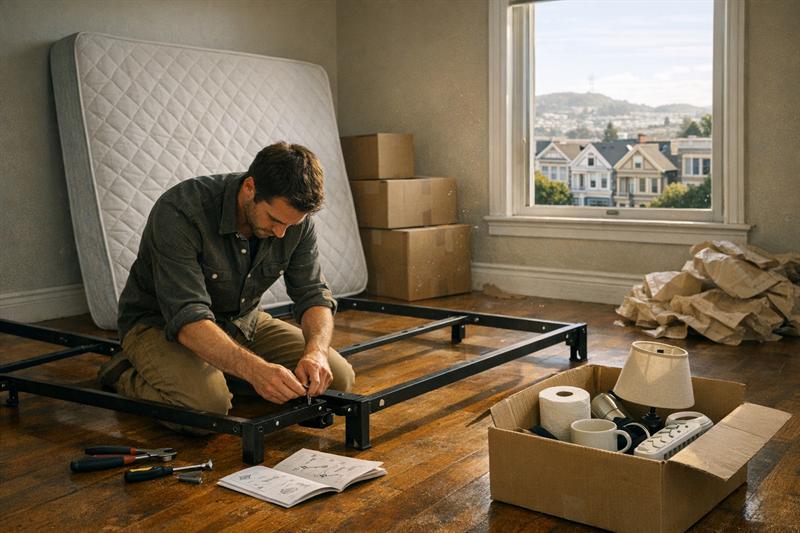
Set Up Beds and Sleeping Areas First
Sleep is the priority. Everything else can wait.
A common mistake is continuing to unpack instead of setting up a place to rest. That usually carries into the next day as fatigue, slower decisions, and more frustration.
Set up beds, pillows, and basic bedding early. It creates a clear stopping point and makes the next day easier to manage.
Get Basic Kitchen Functionality
You only need the basics: water, simple food, and a few key items.
Focus on:
- coffee or tea
- a few utensils
- quick meals or snacks
Trying to organize the entire kitchen on day one spreads your effort too thin. Keep it simple and functional.
Locate Toiletries, Medications, and Daily Items
Personal items should be easy to access without searching.
When these are scattered, the evening gets harder than it needs to be. Usually, that traces back to poor packing or unclear labeling. Keeping these items together avoids unnecessary frustration and helps you settle in faster.
Next Morning: Stabilize and Organize
By the next morning, the goal is to bring structure back into the space. This is where organized unpacking begins.
Create an Unpacking Plan by Room
Follow a clear order:
- Bedroom
- Bathroom
- Kitchen
- Living areas
Unpacking without order leads to partial progress everywhere and completion nowhere. A room-by-room approach keeps momentum steady and visible.
Break Down Boxes and Clear Space
Boxes accumulate fast. If they’re not handled early, they start limiting how you move through the home.
This is how clutter builds. Walkways tighten, surfaces fill up, and even simple tasks take longer. Breaking down boxes as you go helps keep the space usable and prevents unnecessary buildup.
Confirm Address Updates and Deliveries
Make sure your mail, packages, and services are going to the correct address.
When this step is missed, delays follow. Important items can end up at the wrong place, and fixing it later usually takes more time than handling it upfront.
Common Mistakes to Avoid After Moving In
- Unpacking everything at once instead of prioritizing
- Losing track of the essentials box
- Skipping basic checks like locks and utilities
- Poor box placement during unloading
- Ignoring rest and pushing through exhaustion
These mistakes tend to build on each other. What starts as a small delay can turn into a longer, more frustrating setup process.
How Professional Movers Can Simplify the First 24 Hours
The first 24 hours are heavily influenced by how unloading is handled.
At Quantum Moving, the focus is on structured placement from the start. Boxes are placed by room, priority items stay more accessible, and the layout is kept functional. That reduces the need to move things again later.
A common misconception is that unpacking starts after the move. In practice, it starts during unloading. When that step is handled well, everything that follows becomes more efficient.
If you’re noticing any of the following, the setup may already be off track:
- Boxes stacked without clear room placement
- Essential items are hard to locate within the first hour
- Walkways are blocked, limiting movement
- The same boxes are being reopened multiple times
At that point, the issue usually isn’t just unpacking. It’s a lack of structure, and that can keep slowing progress until the space is reset.
Key Takeaways
- Handle utilities, security, and essentials first
- Focus on making the home livable before fully unpacking
- Use a room-by-room system to stay organized
- Early decisions shape how smooth the next few days will feel
Conclusion
The challenge after moving into a new house usually isn’t the number of boxes. It’s the lack of structure in the first 24 hours.
When there’s no clear order, small problems stack up quickly. Essentials get lost, rooms become harder to use, and progress slows down. What should be a short adjustment period can turn into days of unnecessary work.
At Quantum Moving, the approach is built around preventing that outcome. From organized loading to intentional unloading, the focus is on making your first day functional so the rest of the process feels easier to manage.
If you want to avoid the common setbacks that slow everything down, take the next step early. Get a quote and move into your new home with a clearer plan in place.
FAQ
What should you do first when moving into a new house?
Start with utilities, security, and your essentials box. These give you immediate access to power, water, and your daily-use items. If these aren’t handled first, everything else becomes harder to manage.
How do you organize unpacking after a move?
Unpack by priority: bedroom, bathroom, then kitchen. This creates a functional living setup quickly. Without that order, unpacking tends to become scattered and less efficient.
What should be in a first-night box when moving?
Include toiletries, medications, chargers, clothes, and basic kitchen items. These cover your immediate needs without opening multiple boxes. Keeping them accessible saves time and reduces stress.
How long does it take to settle into a new home?
Many people begin to feel settled within a few days, but the first 24–48 hours shape that timeline. A disorganized start often extends the process.
Should you clean before unpacking after moving in?
Yes. Cleaning key areas first helps you avoid moving items later. It keeps the process more efficient and can reduce extra work during unpacking.
What utilities should be checked first after moving in?
Electricity, water, gas, and internet should be checked right away. These are essential for daily use, and delays here affect everything else.