

Table of Contents
Quick Answer: Moving day usually follows a clear sequence: preparation, crew arrival, loading, transport, unloading, and a final walkthrough. Most problems start when packing is unfinished or access isn’t ready, which can lead to delays, extra labor time, and unnecessary stress.
Why Moving Day Feels Uncertain (And How to Prepare for It)
Planning a move and going through it are two different things. On paper, everything can look organized. On the day itself, timing, coordination, and small details matter much more.
That is where uncertainty tends to show up. Without a clear sense of how the day will unfold, decisions become reactive, and small issues can turn into delays and last-minute adjustments.
A structured plan like this moving checklist for California residents helps, but understanding what typically happens throughout the day makes it much easier to stay in control.
Before the Movers Arrive
Final Packing and Last-Minute Checks
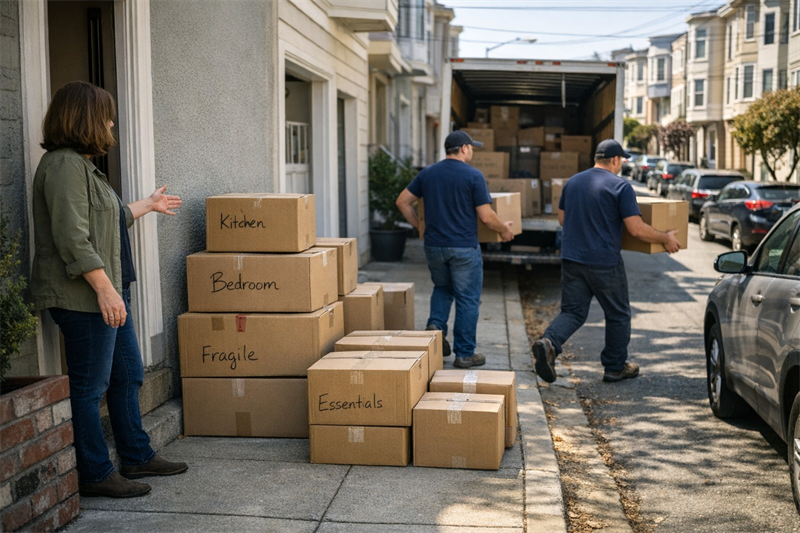
- All boxes sealed and labeled by room
- Fragile items packed and clearly marked
- Essentials set aside, such as documents, chargers, and medications
- No loose or unpacked items left behind
This is where many delays begin. When packing is not finished, movers may have to wait or work around incomplete areas. That slows the process and can increase time on-site.
Fragile items are another common issue. If they are not packed securely, they may need extra attention before loading. This guide on how to pack fragile items safely explains what usually needs additional care.
Preparing Your Home for Movers
- Clear walkways and entry points
- Reserve elevators if required
- Protect floors where needed
- Confirm parking for the moving truck
Access has a bigger impact than many people expect. In the Bay Area, limited parking, narrow streets, and building restrictions can slow down loading. When parking is not secured, crews may need to carry items longer distances, which adds time and effort.
What You Should Keep With You
- Important documents and valuables
- Daily essentials and personal items
- Items your movers do not transport
Movers are there to transport household goods. Keeping critical items with you helps avoid confusion and keeps them accessible throughout the day.
When the Moving Crew Arrives
Walkthrough and Inventory Process
The first step is usually a walkthrough. The crew reviews what is being moved, identifies fragile or oversized items, and confirms the scope of work.
This is also when overlooked details tend to surface. Items not discussed in advance often come up here, and that can affect timing if the workload changes.
Setting Expectations and Timing
The crew lead will usually outline the plan for the day, including estimated timing and any known challenges. This can include stairs, tight spaces, or access limitations.
Clear communication at this stage helps keep the move organized. When expectations are unclear, small issues are more likely to create delays later in the day.
The Loading Process Explained
How Movers Protect Furniture
Furniture is typically wrapped with pads and protective materials before it is moved. Larger pieces may be disassembled to make handling safer and more efficient.
Proper protection matters. Without it, items are more exposed to scratches, pressure, and shifting during transport.
How Trucks Are Packed Efficiently
Loading follows a practical system. Heavier items usually go in first, lighter boxes fill gaps, and fragile items are secured separately.
Labeling plays a bigger role than most people expect. When boxes are not clearly marked, crews may need to pause and confirm placement, which can slow both loading and unloading.
What Can Slow Things Down
- Unpacked or loose items
- Difficult access or long carry distances
- Missing or unclear labels
These issues rarely stay isolated. Delays during loading can affect the rest of the move, including arrival time and unloading efficiency.
Transportation and What Happens in Between
Once everything is loaded, the truck heads to the new location. Timing depends on distance, traffic, and route conditions.
In busy areas like San Francisco, traffic and parking can affect arrival time. When schedules shift, coordination at the destination can become more difficult, especially in buildings with restricted access.
Unloading at Your New Home
Placement and Furniture Setup
Unloading is guided by labels and direction from the customer. Movers place items in assigned rooms and may reassemble key furniture if that is part of the service.
Clear labeling makes this step faster and more accurate. Without it, items may need to be moved more than once, which adds time and effort.
Checking Items and Condition
- Inspect items as they are unloaded
- Note any visible issues right away
- Confirm all items have arrived
This is the easiest time to catch problems. Once the crew leaves, it can be harder to sort out what happened during the move.
Final Walkthrough and Payment
The move usually ends with a final walkthrough. Both locations can be checked, and the delivered items can be confirmed before the crew leaves.
Any concerns are best raised while the crew is still on-site. Addressing them right away makes follow-up simpler.
Common Moving Day Problems (And How to Avoid Them)
- Last-minute packing delays the schedule
- Access issues increase labor time
- Underestimating time leads to rushed decisions
- Miscommunication causes avoidable mistakes
Most moving day problems do not start on the truck. They usually begin with preparation gaps, unclear access, or missing information before the crew arrives.
If you are still comparing options, this guide on how to choose a reliable moving company in the Bay Area explains what to look for before booking.
If any of the following apply, your move may take longer or require extra coordination:
- Boxes are not fully packed or labeled
- Parking or building access is not confirmed
- There is no clear timeline for the day
- Fragile or high-value items are not prepared separately
When these issues are present, the move becomes harder to manage and more time-consuming. Handling them early usually leads to a smoother process.
Key Takeaways
- Moving day follows a clear sequence when preparation is complete
- Many delays begin before the crew arrives
- Access and labeling directly affect efficiency
- Clear communication helps keep the move on track
Conclusion
Moving day gets harder when expectations are unclear and preparation is incomplete. That is when delays build, costs rise, and the process feels more stressful than it needs to be.
Most of these problems can be reduced with solid planning and a team that manages each step well. The difference often comes down to preparation, coordination, and communication.
Quantum Moving works with residential and commercial clients across the Bay Area, with an emphasis on timing, coordination, and clear communication. That structure helps reduce the common problems that slow moves down.
If you want a move that stays organized from start to finish, the next step is to get a clear plan in place. Request a quote.
Frequently Asked Questions
How long does a typical moving day take?
Most moving days take anywhere from a few hours to a full day, depending on the size of the move, distance, and access conditions. Larger homes or difficult access points usually extend the timeline. Preparing in advance helps keep things on schedule.
Do you need to be present during the entire move?
It is best to be present or have someone available. Movers may need direction on placement, access, or specific items. Being available helps prevent confusion and delays.
What do movers expect from you on moving day?
Movers generally expect items to be packed, labeled, and ready to go. Clear pathways and simple instructions allow them to focus on loading and transport. Preparation has a direct effect on how smoothly the move runs.
Can movers move items that are not packed?
Loose or unpacked items usually slow down the process and may need to be packed before loading. That adds time and can increase the total cost. Packing in advance helps the move stay efficient.
What happens if something is damaged during the move?
Any visible damage should be noted as soon as possible, ideally during unloading or the final walkthrough. Raising concerns right away makes them easier to review and address.
How early should movers arrive on moving day?
Most movers arrive in the morning within a scheduled window. An earlier start gives more time to complete loading, transport, and unloading without rushing.




Ready to plan your move?
Free, no-obligation estimate within 24 hours — local, long-distance and office moves across California.