


Table of Contents
Quick Answer: The biggest moving mistakes usually come down to timing, planning, and underestimating Bay Area logistics. When those details are not handled early, delays, damaged items, and added costs become much more likely.
Introduction
Most moves do not fall apart because of one major mistake. They break down when small details get missed.
Boxes are packed late. Parking is not confirmed. Elevator access is assumed. Each issue seems minor until moving day, when everything has to work together.
In the Bay Area, those small gaps add up quickly. Tight streets, strict building rules, and limited move windows leave very little room for error. That is why planning needs to be specific from the start.
Why Moving Mistakes Are More Common Than You Think
The Hidden Complexity of Bay Area Moves
On the surface, a move looks simple: load items, transport them, unload. In practice, Bay Area moves often involve access constraints, scheduling limits, and coordination across multiple locations.
A move that looks straightforward can become more complicated when the truck has nowhere to park or the elevator is already booked. Once access is delayed, everything behind it shifts.
That usually means longer move times and higher overall costs.
How Small Oversights Turn Into Bigger Problems
One missed step often creates problems later. Packing runs behind, which compresses loading time. Loading gets rushed, which increases the chance of damage. Arrival timing slips, which affects building access.
Instead of solving one issue, you end up managing several at once. At that point, the move becomes reactive instead of organized.
The Most Common Moving Mistakes (and How to Avoid Them)
Underestimating Time and Planning
This is one of the most common problems. Packing takes longer than expected, and many people run out of time right before moving day.
When that happens, everything speeds up. Items get packed poorly, labeling gets skipped, and coordination suffers. Following a structured plan like this step-by-step moving checklist for California residents helps keep each phase on track and reduces last-minute pressure.
Not Decluttering Before Packing
Moving everything without sorting first adds unnecessary volume. More items mean more boxes, more labor, and more time.
That often leads to paying to move things you do not need. It also makes unpacking slower, which extends the disruption after the move.
Choosing the Wrong Type of Moving Service
Not every move needs the same level of support. A common mistake is choosing based on price alone without thinking through the actual workload.
A move may start as a DIY plan, but packing falls behind or heavy items become harder to manage than expected. At that point, the service level no longer matches the move.
Reviewing how to choose a reliable moving company in the Bay Area can help you match the type of service to the demands of the job.
Waiting Too Long to Book Movers
Availability in the Bay Area tightens quickly. Waiting too long reduces your options and limits flexibility.
That can leave you with less convenient schedules, which then affects the rest of the plan.
Poor Packing That Leads to Damage
Packing quality directly affects how well items hold up during a move. Weak boxes, improper padding, and overfilled containers increase the risk of damage.
Items shift during transport, boxes lose structure, and fragile belongings are left exposed. Using proper methods like those outlined in packing fragile items safely helps protect items throughout the process.
Forgetting Building Rules and Parking Logistics
This is one of the most common breakdown points in the Bay Area. Many buildings require reservations, permits, or specific move windows.
When that step is missed, access becomes restricted. That can lead to delays, waiting time, or rescheduling.
Not Labeling Boxes Properly
Skipping labels slows everything down. Movers spend more time figuring out placement, and unpacking becomes less efficient.
That usually means spending extra time after the move searching for basic items instead of getting settled.
Ignoring Insurance and Valuation Coverage
Coverage is often misunderstood. Many people assume everything is fully protected without reviewing the details first.
If something is damaged, the outcome depends on the type of coverage selected. Understanding that in advance helps avoid surprises later.
Bay Area-Specific Moving Challenges to Plan For
Narrow Streets and Limited Parking
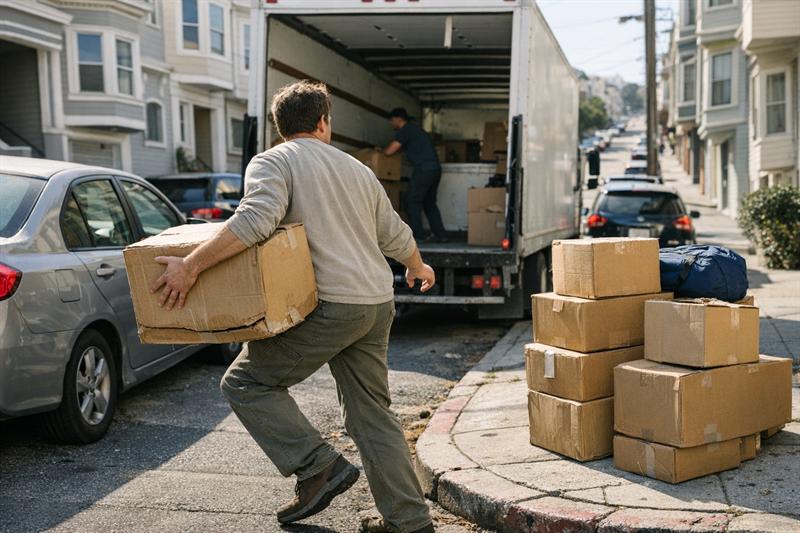
Many Bay Area neighborhoods were not designed for large trucks. Parking is limited, and access points can be tight.
That affects how quickly items can be moved. When trucks cannot park nearby, the process usually takes longer and requires more effort.
Stairs, Elevators, and Access Restrictions
Buildings often control when and how moves happen. Elevators may need to be reserved, and some properties limit move-in hours.
If those details are missed, the move can pause while access is sorted out. That delay can affect the rest of the schedule.
Traffic Timing and Move Scheduling
Traffic affects more than travel time. It can also affect arrival windows, coordination, and building access.
If timing is off, the schedule shifts. That can create conflicts with reservations or availability at the destination.
How to Build a Mistake-Proof Moving Plan
Timeline Breakdown (Weeks Before → Moving Day)
- 4–6 weeks out: book movers and begin decluttering
- 2–3 weeks out: pack non-essential items
- 1 week out: confirm permits, parking, and building access
- Moving day: follow a clear, pre-set plan
This structure helps keep each step under control and reduces last-minute decisions.
When to Use Packing, Storage, or Full-Service Moving
Some moves involve conditions that are harder to manage, such as tight timelines, large inventories, or complicated access points.
That is when added support can make the move more manageable. Packing services help protect items. Storage helps when timing does not line up. Full-service moving can keep the process coordinated under one plan.
When Professional Help Prevents Costly Errors
If your move includes tight timing, limited access, or a high volume of items, small issues can escalate quickly.
Watch for these signs:
- You are running out of time to pack properly
- Your building has strict access or elevator scheduling
- Parking or truck placement is unclear
- You are moving heavy or fragile items
If these conditions are present, delays and damage become more likely. In that situation, the right support can help keep the move on track.
Key Takeaways
- Most moving problems start with small planning gaps
- Timing and coordination have a major impact on how smoothly a move goes
- Bay Area logistics require early, specific preparation
- Packing, access, and scheduling are common failure points
- Professional support can help stabilize more complex moves
Conclusion
Moving mistakes tend to follow a pattern. They begin with small oversights and build into delays, damaged items, and rising costs.
If those early gaps are not addressed, the move becomes reactive. That is when schedules slip, access is missed, and problems start to compound.
Quantum Moving focuses on preventing those breakdowns. With experience handling Bay Area logistics, building requirements, and more complex move conditions, the goal is to plan the details before they become problems.
The next step is to identify where your move could go off track and address it early. You can request a quote here to get a clear plan in place and avoid the issues that often cause delays.
FAQ
What are the most common moving mistakes?
The most common mistakes include poor planning, weak packing, and missing logistics such as parking or building access. These issues can lead to delays, damaged items, and higher costs. A clear plan and early coordination prevent many of them.
How far in advance should movers be booked in the Bay Area?
Many moves are booked 2–4 weeks in advance, but timing depends on the season and the complexity of the job. Booking earlier usually gives you more scheduling flexibility and less last-minute pressure.
Is it cheaper to move yourself or hire movers?
A DIY move may look cheaper at first, but the total cost can rise once time, labor, equipment, and risk are considered. The better option depends on how complex the move is and how much support you need.
What should not be packed when moving?
Hazardous materials, perishable items, and important documents should be kept separate. These items can create safety concerns or need to stay accessible during the move.
How can moving damage be prevented?
Damage can be reduced by using proper materials, packing carefully, and handling items with care. Fragile items need extra protection, and boxes should not be overloaded.
Do you need a parking permit for moving in San Francisco?
In many situations, a temporary parking permit may be needed for a moving truck. Checking the rules in advance helps avoid access issues and unnecessary delays.




Ready to plan your move?
Free, no-obligation estimate within 24 hours — local, long-distance and office moves across California.