Quick Answer: Fragile items are most likely to break during a move when they shift inside the box or get compressed under weight. The safest way to pack them is to wrap each piece, cushion the box, and secure everything so nothing moves during transport.
Introduction
Packing fragile items is where many moves start to go off track. A box can look full and protected, but once it is stacked in a truck and transported across the Bay Area, small gaps and uneven packing can quickly turn into damage.
Breakage usually does not come from one hard hit. More often, it happens over time when items shift, press against each other, or carry weight unevenly.
If you’re following a complete moving checklist for California residents, packing fragile items correctly is one of the steps that can make the biggest difference in how your move turns out.
Why Fragile Items Break During Moves (And How to Prevent It)
The Real Causes of Damage
Fragile items tend to break for a few consistent reasons:
- Items shift and make contact inside the box
- Weight from other boxes creates downward pressure
- Uneven packing creates stress points
One of the most common problems is a box that feels secure but still has small empty spaces. During transport, even normal road vibration can cause items to move into those gaps and collide.
Protection vs. Immobilization
Padding helps, but it is only part of the job. The bigger goal is keeping items from moving inside the box.
This is where many packing attempts fall short. An item may be wrapped well, but if it can still shift, it can still absorb impact and pressure during the move. Keeping everything snug and supported is what lowers that risk.
Essential Packing Materials for Fragile Items
Must-Have Materials
- Packing paper: creates a close wrap and fills small gaps
- Bubble wrap: adds impact protection
- Sturdy boxes: help boxes hold their shape under stacking pressure
- Packing tape: reinforces and seals the box
Material choice matters more than many people expect. Weak boxes or inconsistent materials can make a box less stable before the move even starts.
What to Avoid
- Newspaper that can transfer ink or tear easily
- Old boxes that bend or lose shape under weight
- Loose filler that adds bulk without keeping items stable
Adding more material does not automatically improve protection. Overpacking can create internal pressure, especially once boxes are stacked, which can raise the chance of damage.
When materials or packing techniques are inconsistent, many people choose professional packing services to simplify the process and reduce the risk of breakage.
Step-by-Step: How to Pack Fragile Items Properly
Step 1: Prepare the Box
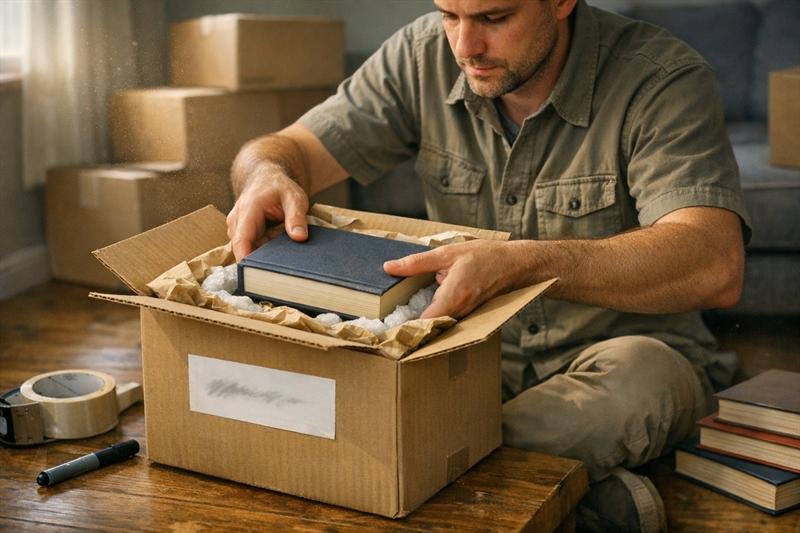
Reinforce the bottom with tape and add a cushioning layer. This creates a more stable base and helps absorb pressure during handling.
Step 2: Wrap Each Item Individually
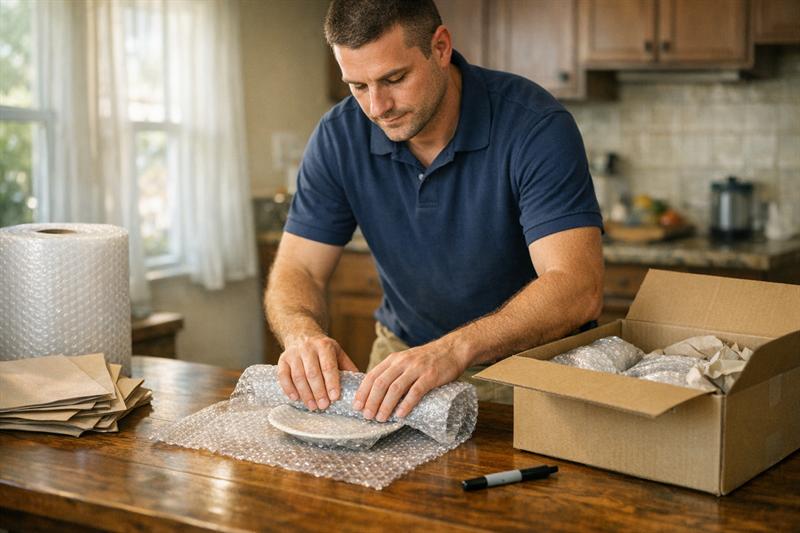
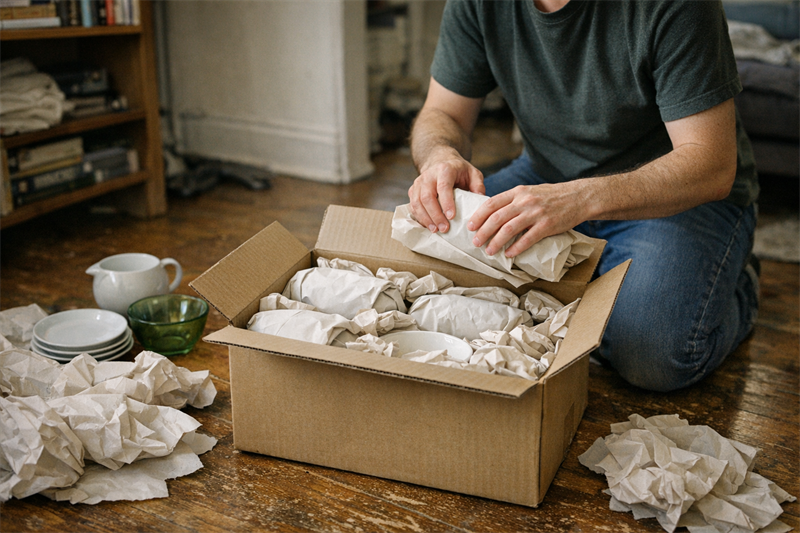
Wrap each item fully with no exposed areas. Loose wrapping is a common issue and can lead to chips, scratches, or surface damage.
Step 3: Layer and Cushion Strategically
Place heavier items at the bottom and lighter ones on top. This helps keep weight balanced and reduces pressure on more delicate pieces.
Step 4: Fill Gaps to Prevent Movement
This is where many boxes fall short. Any empty space allows movement. Fill gaps so items stay supported throughout the move.
Step 5: Seal and Label Correctly
Seal the box firmly and label it as fragile. A label does not guarantee special handling, but it helps identify boxes that should be placed and stacked with more care.
How to Pack Specific Fragile Items
Dishes and Glassware
Pack plates vertically and wrap each piece individually. This reduces pressure across flat surfaces and helps prevent cracks.
Dishes are more likely to break when they are stacked flat without enough separation, which puts stress directly on the edges.
Electronics and TVs
Use original boxes when available. If not, use sturdy boxes, generous padding, and flat protective layers to help shield screens.
Electronics can be damaged by movement inside the box, especially when heavier parts shift during transport.
Artwork and Mirrors
Wrap them with protective layers and use corner supports when possible. Keeping these items secure and well-supported helps reduce stress during handling and transport.
Lamps and Decorative Items
Disassemble them when possible and wrap each part separately. This helps reduce pressure on weaker connection points and delicate surfaces.
Common Packing Mistakes That Lead to Breakage
- Overfilling boxes until items are compressed
- Leaving empty space inside the box
- Packing heavy and fragile items together
- Skipping labels or basic organization
Boxes that are too tight can create pressure. Boxes that are too loose allow movement. Either problem can increase the chance of damage.
When to Consider Professional Packing Services
Some situations make packing more difficult than it first appears:
- Items with high monetary or sentimental value
- Larger moves with multiple rooms and a wide mix of items
- Limited time that leads to rushed packing
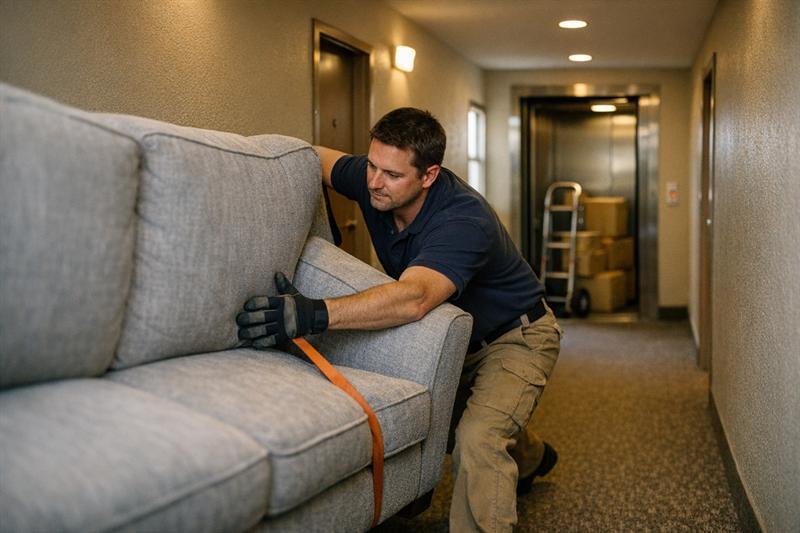
- Homes with stairs, tight hallways, or restricted access
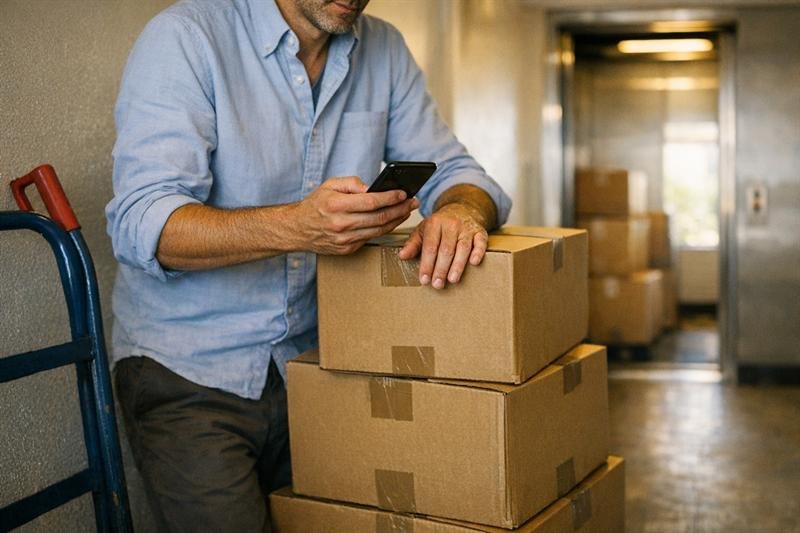
In Bay Area moves, those conditions are common. Tight spaces and longer drive times can make careful packing even more important.
If you notice any of the following, your packing likely needs a more structured approach:
- Boxes feel uneven or unstable when lifted
- You can feel items shifting inside
- Fragile items are packed with heavier objects
- Packing is being rushed to meet a deadline
At that point, the chance of damage goes up. Repacking before moving day or getting professional help can save time and help protect the items you care about most.
Key Takeaways
- Fragile items break when they move or carry uneven pressure
- Keeping items secure inside the box is critical
- Packing technique matters as much as materials
- Most packing mistakes are preventable with a consistent method
- Professional packing can be a practical option for complex moves
Conclusion
Packing fragile items without a clear method often leads to damage that only becomes obvious when the boxes are opened. In many cases, the cause is movement inside the box or pressure from poor stacking.
Those problems build throughout the move. Once items are loaded and transported, there is little room to correct them.
Quantum Moving approaches packing with a focus on structure, balance, and keeping items secure from the start. That helps reduce the same packing issues that commonly lead to breakage.
If you’re planning a move and want to avoid repacking, replacements, or unnecessary damage, the next step is simple. Explore professional packing services or request a quote to get everything packed correctly from the beginning.
Frequently Asked Questions
What is the best way to pack fragile items for moving?
The best approach is to wrap each item, cushion the box, and remove any space that allows movement. Fragile items are more likely to break when they shift and make contact during transport.
How do you pack glassware so it doesn’t break?
Wrap each piece and pack glasses with enough separation and support so they do not knock against each other. For many glass items, upright packing works best because it reduces pressure on delicate edges and rims.
Should fragile items be packed tightly or loosely?
They should be packed securely so they do not move, but not so tightly that they are under pressure. Movement can cause impact, while compression can cause cracks or breakage.
What materials are best for packing fragile items?
Packing paper, bubble wrap, sturdy boxes, and strong tape are some of the most useful materials. They work best when used together to manage both movement and impact.
Is bubble wrap enough to protect fragile items?
No. Bubble wrap helps absorb impact, but it does not stop items from shifting inside the box. Boxes still need proper spacing, support, and gap filling.
When should you hire professional packers?
It can make sense when items are especially valuable, the move is complex, or time is limited. In those situations, careful packing becomes harder to manage without a clear system.