


Table of Contents
How to Move Heavy Items Safely (Pianos, Safes, Pool Tables & More)
Quick Answer: Moving heavy items safely comes down to using the right equipment, following proper lifting technique, and recognizing when a job is too risky to handle on your own. Most problems start when weight distribution, tight spaces, or coordination are underestimated.
Why Moving Heavy Items Is Riskier Than It Looks
Moving heavy items is not about strength alone. It takes control, balance, and a clear plan before anything is lifted.
Many problems start when an item seems manageable at first, then has to turn through a doorway or go down a staircase. Once the angle changes, the weight can shift and the item becomes much harder to control.
- Back strain from lifting incorrectly
- Crushed fingers during repositioning
- Scratched floors and dented walls
- Items slipping on stairs or uneven surfaces
These situations can become even more difficult in tight Bay Area homes, where staircases, hallways, and entry points leave little margin for error.
Common Injuries and Property Damage Risks
- Back and shoulder strain from improper lifting
- Hands caught between heavy surfaces
- Floors damaged from dragging instead of lifting or rolling properly
- Walls marked or dented when turning large items
These are the kinds of problems that happen when heavy items are moved without a clear plan or the right support.
Why Weight Distribution Matters More Than Total Weight
Total weight matters, but balance often matters more. Items like safes and pianos can carry weight unevenly, which makes them harder to steady and guide.
When the center of gravity shifts, the item can pull away from the people moving it. Once that happens, it becomes much harder to correct without dropping the item or damaging surrounding surfaces.
Essential Equipment for Moving Heavy Items
The right equipment changes how weight is handled. It reduces strain and gives you better control over movement.
One of the biggest DIY mistakes is relying on lifting alone instead of using tools designed to move weight more safely and efficiently.
Dollies, Straps, Sliders, and Protective Materials
- Dollies: Help move heavy items without carrying their full weight
- Lifting straps: Help distribute weight and reduce pressure on the back and arms
- Furniture sliders: Allow items to move across floors with less friction
- Moving blankets: Protect surfaces and help prevent scratches and dents
Each tool has a specific purpose. Skipping them, or using the wrong one for the job, increases the chances of damage and loss of control.
When Basic Tools Are Not Enough
Some items require more than standard equipment. Pianos, safes, and pool tables combine weight, size, and awkward dimensions in ways that make them much harder to manage.
If stairs, tight turns, or multiple levels are involved, the difficulty increases. That is often the point where a DIY move becomes much less practical.
Safe Lifting Techniques Everyone Should Know
Most moving injuries come from how items are lifted and carried, not just how heavy they are. Good technique helps prevent problems before they start.
Proper Body Mechanics
Keep the item close to your body and lift with your legs instead of your back. Avoid twisting while carrying weight.
If the load feels unstable or pulls away from your center, the lift is already off balance. Continuing from that position makes strain and loss of control more likely.
Team Lifting Coordination
Heavy items require coordinated movement. One person should lead so everyone lifts, turns, and sets down at the same time.
- Lift together
- Move at a steady pace
- Communicate before turning or setting down
Without coordination, one side can shift before the other. That is when items start to tilt, slip, or drop.
Navigating Stairs and Tight Spaces
Stairs create one of the highest-risk situations in a move. The angle and limited space reduce your ability to adjust if something shifts.
Tight hallways and narrow landings add another challenge because there is less room to reposition safely. Large or uneven items become especially difficult in these conditions.
How to Move Specific Heavy Items
Heavy items are not all the same. Each type needs a different approach, and treating them the same is where damage often starts.
How to Move a Piano Safely
Pianos combine substantial weight with delicate internal components. Even if the exterior looks solid, the inside can be affected by rough handling or sudden shifts during a move.
Safe handling depends on controlled movement, secure wrapping, and proper support from start to finish.
How to Move a Safe
Safes are compact but extremely heavy, with much of the weight concentrated in a small footprint. That makes them difficult to balance and more likely to put pressure on flooring.
Without the right equipment and positioning, safes can become difficult to control very quickly.
How to Move a Pool Table
Pool tables are built to stay level and stable, not to be moved as one assembled piece. In many cases, they are partially or fully disassembled before transport.
Trying to move one intact can place stress on the frame, slate, or legs and may affect how the table plays after reassembly.
Reassembly and leveling also need to be handled carefully so the table functions properly in its new space.
Large Furniture and Appliances
Breaking items down into smaller parts can make them easier to move and reduce risk. Removing doors, legs, shelves, or loose components improves control and can help with tight clearances.
It also helps to reduce how much you are moving overall. Following a process like decluttering before a move can limit unnecessary heavy lifting.
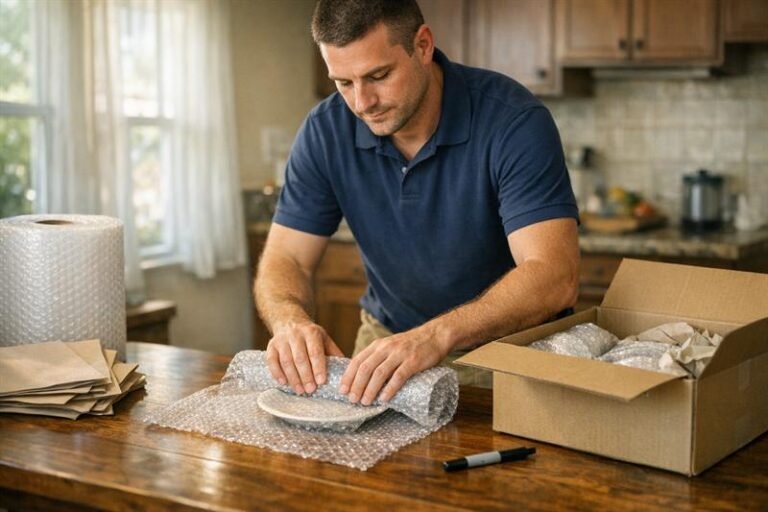
For items with delicate parts, protection matters. Using proper methods from packing fragile items safely can help reduce the chance of damage during transport.
When DIY Moving Becomes Unsafe
There is a point where handling heavy items without help stops being practical. Beyond that point, the chances of injury or damage increase quickly.
Warning Signs You Should Not Ignore
- The item cannot be lifted or controlled without obvious strain
- Stairs or tight hallways are involved
- Proper equipment is not available
- The item is valuable, delicate, or difficult to replace
If these conditions are present, the move is already higher risk.
Cost of Damage vs Cost of Professional Help
Damage adds up quickly. Floor repairs, wall damage, and item replacement can end up costing more than expected.
What starts as a way to save money can turn into extra expenses and delays once something goes wrong.
If you are dealing with any of the following, professional help is usually the safer option:
- Items that require multiple people to lift
- Moves involving stairs, tight turns, or limited access
- High-value items like pianos, safes, or glass furniture
- No access to proper moving equipment
At that stage, continuing without help often creates unnecessary risk.
How Professional Movers Handle Heavy Items
Professional movers approach heavy items with planning and structure. The goal is to reduce surprises before the move starts and keep the process controlled throughout.
Specialized Equipment and Planning
- Heavy-duty dollies and lifting equipment
- Protective materials for both items and surfaces
- Pre-move walkthroughs to plan for tight spaces and access points
This preparation reduces guesswork and helps keep the move organized from start to finish.
Protecting Floors, Walls, and Entryways
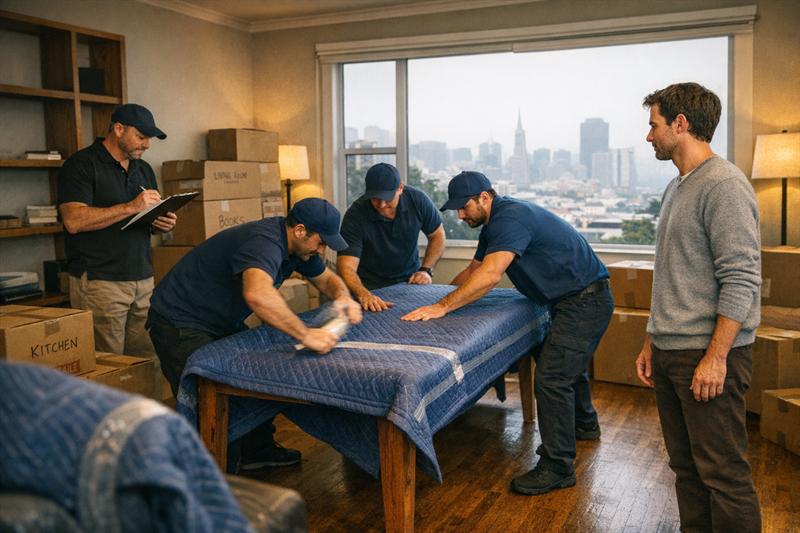
Protection should be built into the process. Floors can be covered, walls can be padded where needed, and entry points should be planned before moving begins.
That preparation helps reduce the kind of avoidable damage that happens in rushed or unplanned moves.
Local Challenges (Bay Area Homes & Buildings)
Bay Area moves come with specific challenges. Narrow staircases, older buildings, and limited loading access are common.
Quantum Moving regularly works in these conditions, where furniture may need to pass through tight entryways, sharp turns, or multi-level layouts.
Planning ahead, similar to what is outlined in a complete moving checklist, can help avoid delays and last-minute adjustments.
Key Takeaways
- Moving heavy items safely depends on control and planning, not just strength
- Improper handling can lead to injury and property damage
- Different items require different moving approaches
- Risk increases with stairs, tight spaces, and lack of equipment
- Professional movers help reduce risk through preparation and proper tools
Conclusion
Moving heavy items safely means managing weight, space, and control at the same time. Problems usually start when one of those factors is overlooked.
When heavy items are handled poorly, the result is often damage, strain, or delays that affect the rest of the move.
Quantum Moving handles these situations with planning, the right equipment, and experience working in tight Bay Area spaces. For heavy or high-risk items, bringing in a professional team is often the most practical way to avoid preventable problems.
Get started by requesting help here: Request a quote.
Frequently Asked Questions
What is the safest way to move heavy items?
The safest approach is to use proper equipment, correct lifting technique, and coordinated movement. Heavy items like safes or pianos require balance and control. When those are difficult to maintain, professional help is often the safer choice.
Can you move heavy furniture by yourself?
Some smaller items can be moved alone, but larger furniture can become unstable without help. If you cannot keep the item close, balanced, and under control, it is better to stop and get assistance.
What equipment helps move heavy objects?
Dollies, lifting straps, sliders, and padding are commonly used to manage weight and protect surfaces. Using the right equipment can make the move safer and help reduce property damage.
How do you move heavy items up or down stairs?
Stairs require planning, coordination, and controlled movement. The limited space increases risk, especially with large or uneven items. For many stair moves, multiple people and the right equipment are needed.
When should you hire professional movers for heavy items?
Professional movers are often the better choice when items are extremely heavy, valuable, or difficult to move through tight spaces. Pianos, safes, and pool tables are common examples where specialized handling is important.



Ready to plan your move?
Free, no-obligation estimate within 24 hours — local, long-distance and office moves across California.