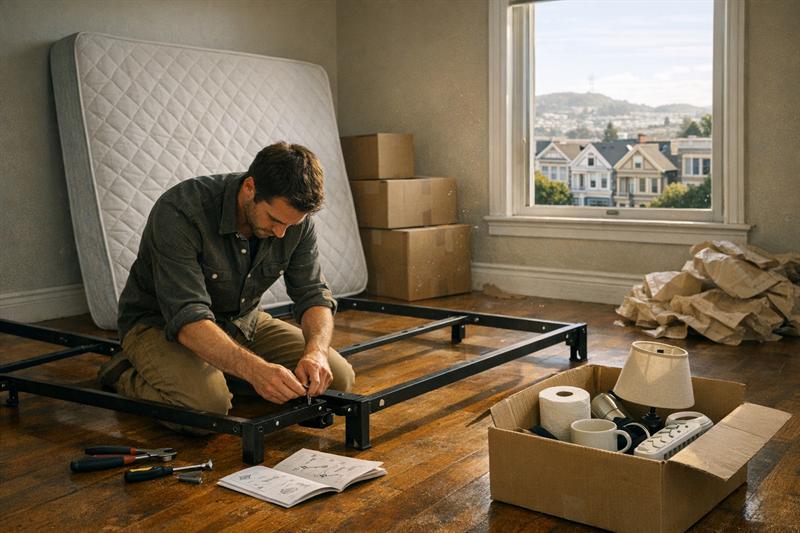

Quick Answer: A less stressful move comes down to timing, sequencing, and coordination. Many moving problems start weeks before moving day with delayed planning, rushed packing, or overlooked logistics, and they can lead to delays, damaged items, or avoidable complications.
Moving feels overwhelming because everything stacks up at once. Packing, scheduling, paperwork, and logistics all compete for attention. Without a clear plan, small gaps can turn into bigger problems.
On most moves, the difference between a smooth experience and a chaotic one usually comes down to how early the process starts and how clearly each step is planned.
Why Moving Feels Overwhelming (And How to Fix It)
Moving is not a single task. It is a series of overlapping responsibilities. Packing, hiring movers, updating your address, and coordinating access all happen around the same time. Without structure, things get missed.
The 3 Biggest Causes of Moving Stress
- Poor timing
- Disorganization
- Last-minute decisions
A common problem is starting too late. Packing gets delayed, movers are booked late, and building logistics are handled at the last minute. That pressure tends to carry into every stage of the move.
Why Most Moving Advice Falls Short
Most advice offers tips without enough context. A checklist alone does not help much if everything is done at the wrong time. Moving stress is often a sequencing issue, not just a knowledge issue.
When there is no timeline, tasks pile up and decisions become reactive instead of planned.
The Stress-Free Moving Framework (Start Here)
A smooth move usually follows a clear structure:
- Plan: Set your timeline, budget, and moving approach
- Prepare: Declutter, pack, and organize logistics
- Execute: Coordinate moving day and settle in
This approach works because it separates planning from execution. A common mistake is trying to handle everything at once, which often leads to missed steps and rushed decisions. When each phase is handled in order, the process is easier to manage.
6–8 Weeks Before Moving Day: Build Your Plan
This phase sets the direction for everything that follows. When planning is rushed here, the rest of the move is harder to manage.
Create a Moving Timeline That Works
Break the move into weekly steps. This keeps progress steady and helps prevent last-minute pressure.
When this step is skipped, many tasks get pushed into the final two weeks. That usually means rushed packing and fewer scheduling options.
Should You Hire Movers or Do It Yourself?
This decision depends on your time, workload, budget, and distance. Moves with more volume, tighter timelines, or longer distances often require more coordination than people expect.
A move that seems manageable at first can become much harder once packing, lifting, transportation, and building access all have to be handled together.
For a deeper breakdown, see how to choose a reliable moving company in the Bay Area.
Book Movers Early (California Demand Insight)
In the Bay Area, moving schedules can fill quickly, especially during busy periods. Waiting too long reduces flexibility and can limit your choice of dates or time slots.
Once availability gets tight, the rest of your plan often has to adjust around whatever opening is left.
Learn more about timing in how far in advance you should book movers in California.
If your move is getting close and key pieces are still undecided, now is the time to get organized.
- No confirmed moving date or crew
- Packing has not started
- Unclear building access or parking plan
- No timeline for the remaining tasks
Addressing those details now helps prevent delays and rushed decisions later.
4 Weeks Before: Organize and Declutter
Reducing what you move simplifies everything. Fewer items mean less packing, less handling, and fewer chances for damage.
What to Keep, Donate, or Discard
Focus on items you actively use and want in your new space. Things you have not used in a long time often add unnecessary volume to the move.
Keeping everything can make packing take longer and make the move harder than it needs to be.
For a structured approach, review how to declutter before moving.
Create a Simple Home Inventory
Keeping track of what you are moving adds clarity. It also makes unloading and unpacking more organized.
Without a simple inventory, items are harder to locate later, which can slow down the settling-in process.
2 Weeks Before: Packing Without Chaos
Packing is where many moves start to lose momentum. When it is rushed or unstructured, confusion increases and items are more likely to be mishandled.
Smart Packing Strategies That Save Time
- Pack one room at a time
- Start with items you do not use daily
- Group similar items together
When packing is delayed, items get mixed together, boxes become harder to sort, and unpacking takes longer.
Labeling Systems That Actually Work
Clear labeling keeps the move organized from start to finish. Include the destination room and a simple priority note so boxes can be placed where they belong right away.
Vague or missing labels slow down unloading and create confusion once everything arrives.
When to Consider Professional Packing Services
Professional packing can help when time is limited or certain items need extra care. It adds structure and can reduce the risk of damage during the move.
It is best to consider this early, before packing becomes overwhelming and options become more limited.
Explore options with professional packing services.
1 Week Before: Confirm the Details
This is the final coordination stage. Missing details here can create delays on moving day.
Transfer Utilities and Update Address
Schedule utility transfers and update your address in advance to avoid service gaps.
When this gets missed, it can create immediate inconvenience during the first few days in the new space.
Plan for Building Access, Parking, and Permits
Many moves in California involve access restrictions, elevator reservations, or parking limitations.
If access is not confirmed ahead of time, movers may be delayed and the job can take longer than planned.
Moving Day: How to Keep It Smooth
Moving day is where preparation shows. Most issues at this stage trace back to details that were missed earlier.
What to Expect from Professional Movers
Professional movers typically handle loading, transportation, and unloading. Clear communication about access, fragile items, and priority boxes helps keep everything aligned.
Common Moving Day Mistakes to Avoid
- Not having essential items accessible
- Unclear or missing labels
- Lack of coordination between everyone involved
These are common issues that can slow down the process and affect the day’s schedule.
How to Stay Organized Under Pressure
Keep important items separate, keep your phone available, and be ready to answer questions during the move.
For a detailed breakdown, see what happens on moving day.
After the Move: Settle In Without Stress
The move does not end when everything is delivered. How you unpack shapes how quickly the new place starts to feel functional.
Unpack Strategically (Not All at Once)
Start with essential spaces like the kitchen, bathroom, and bedroom. Build from there instead of trying to do everything at once.
Trying to unpack everything immediately often leads to clutter and burnout.
Check for Damage or Missing Items
Review your items early and document anything that needs follow-up.
Waiting too long can make those issues harder to sort out later.
Key Takeaways
- Moving stress often comes from timing and sequencing problems
- Starting early reduces pressure later
- Structured packing helps prevent confusion and damage
- Logistics planning plays a major role in how smoothly the move goes
When to Consider Professional Help
Some moves involve more coordination than expected. Professional support becomes more useful as the move gets larger, tighter on time, or more complex.
- Larger homes with more items to manage
- Tight timelines with limited flexibility
- Long-distance moves that require more coordination
- Fragile or high-value items that need extra care
What starts as a simple plan can become time-consuming and physically demanding once packing, access, transportation, and scheduling all come into play.
Quantum Moving supports residential and commercial moves across California, with services that include packing, transportation, and storage coordination when needed.
Conclusion
Moving becomes more stressful when planning is delayed, packing is rushed, and logistics are handled too late. Those issues tend to build early and affect the rest of the move.
When the sequence is off, delays, confusion, and extra costs are more likely. It is much easier to prevent those problems than to fix them at the last minute.
A structured plan changes how the move unfolds. When each step is handled at the right time, the process feels more controlled and more predictable.
If your move is approaching and key details are still unclear, this is a good time to get a clear plan in place. Quantum Moving helps organize the process from start to finish to reduce delays and last-minute complications.
Request a moving quote to get clear next steps and move forward with a plan that fits your timeline.
Frequently Asked Questions
What is the best way to have a stress-free move?
The most effective approach is to follow a structured timeline and start early. Moves tend to get harder when decisions are delayed. Planning 6–8 weeks ahead helps keep tasks manageable and reduces last-minute pressure.
How far in advance should you start planning a move?
Starting 6–8 weeks before moving day usually gives you enough time to organize logistics, schedule movers, and pack in stages. Shorter timelines can lead to rushed decisions and fewer options.
What should you pack first when moving?
Begin with items you do not use every day. This clears space and builds momentum. Waiting too long to start packing often creates unnecessary time pressure.
Is it worth hiring professional movers?
For larger or more complex moves, professional movers can help manage the workload and logistics. When time is limited or the move involves access challenges, stairs, distance, or fragile items, support can be a practical choice.
What do most people forget when moving?
Utilities, address updates, and building-access details are often overlooked. Those items affect the first days in a new space, so it helps to handle them in advance.
How do you stay organized during a move?
Use a clear labeling system, pack in stages, and keep essential items separate. Organized packing makes boxes easier to track and speeds up unpacking after arrival.